Mahjong Tile Materials Explained: Acrylic vs Melamine vs Imitation Jade vs Lucite
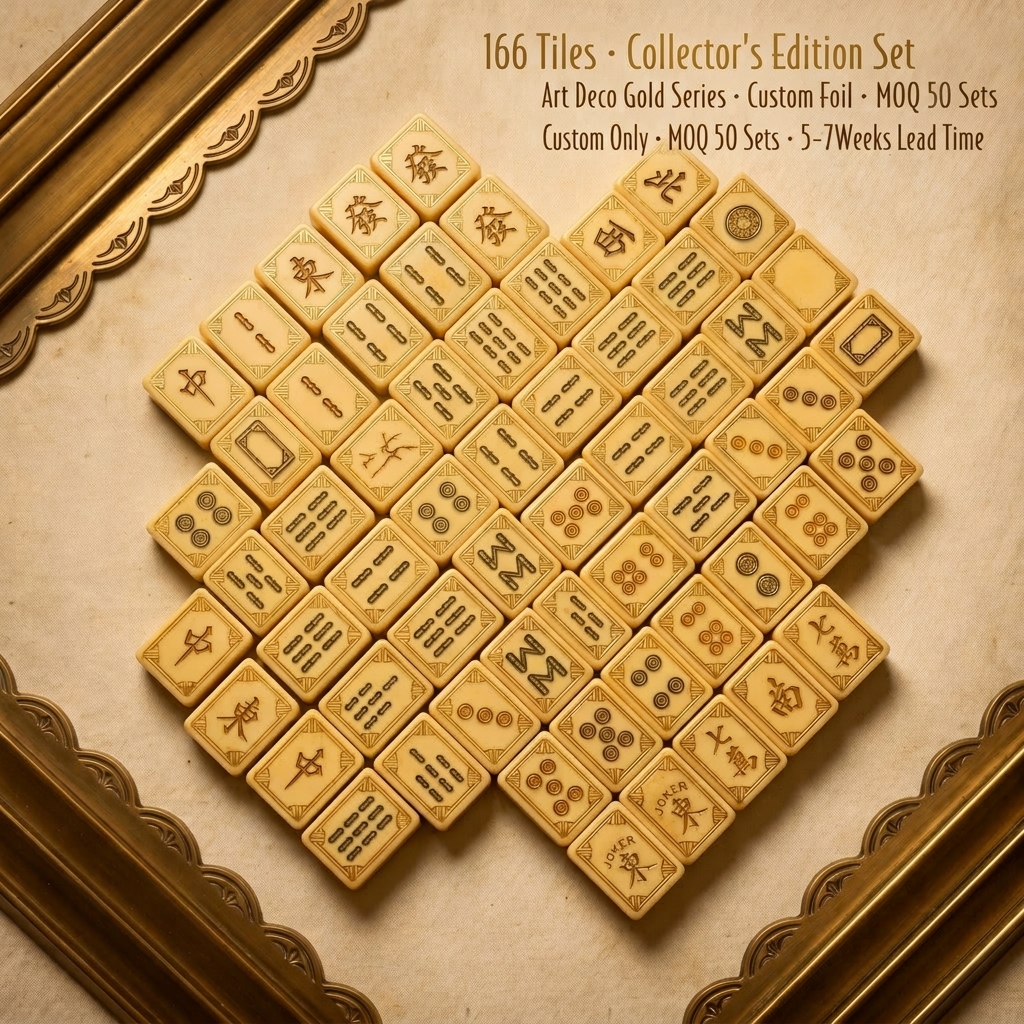
What your mahjong tiles are actually made of — an honest, factory-floor comparison of acrylic, melamine, imitation jade and lucite.
Melamine: The Workhorse
Melamine is a high-pressure resin — dense, matte and nearly indestructible. It is the material of school clubs and daily coffee groups. Its weakness is aesthetic: colors are surface-applied, so elaborate engraved designs are not possible, and very light tones can yellow over many years of sun exposure.
Acrylic: The Designer Standard
Acrylic (PMMA) is the material behind every glossy, translucent, laser-engraved set you have admired. It accepts deep engraving, holds Pantone-matched color, and can be layered — our four-layer tiles sandwich a color core between clear faces, which is how you get a white tile with a colored symbol visible from the edge. It is lighter than melamine but comfortably heavy at production thickness.
Imitation Jade: The Heirloom Look
Imitation jade is an acrylic formula tuned for that dense, translucent, slightly waxy green. Under lamp light it glows the way nephrite does, at a fraction of the cost and with none of the fragility. Gift and commemorative sets lean on it heavily.
"Lucite" — Marketing vs Reality
Lucite is a DuPont brand name for acrylic. Most tiles sold as "lucite" today are standard acrylic, and that is fine — the properties buyers want (clarity, engraving, weight) come from acrylic itself, not the trademark. What actually matters is grade: optical-grade acrylic is crystal clear with no green edge-cast, and that is what we compound in-house for our designer lines.